
IEM Cologne 2026 has delivered the most radical overhaul of tournament items in Counter-Strike history. The familiar sticker capsules are gone entirely. In their place, Valve has opened the Major Shop — a storefront where you no longer pull a random sticker out of a pack but instead buy the exact logo or autograph you want at a dynamic price that moves with demand. Souvenir packages have been retired too: the last batch shipped at Budapest 2025, and from now on, fans use the new Souvenir-O-Matic to turn any weapon in their inventory into a souvenir tied to a specific match. Top stickers cleared $1,000 within hours of launch.
What Actually Changed
Three structural changes shipped with the IEM Cologne 2026 update:
- No more sticker capsules. The old format — buy a $1 capsule, get a random sticker, hope it's a holo of your favorite player — is dead. The Cologne 2026 capsule line was never produced.
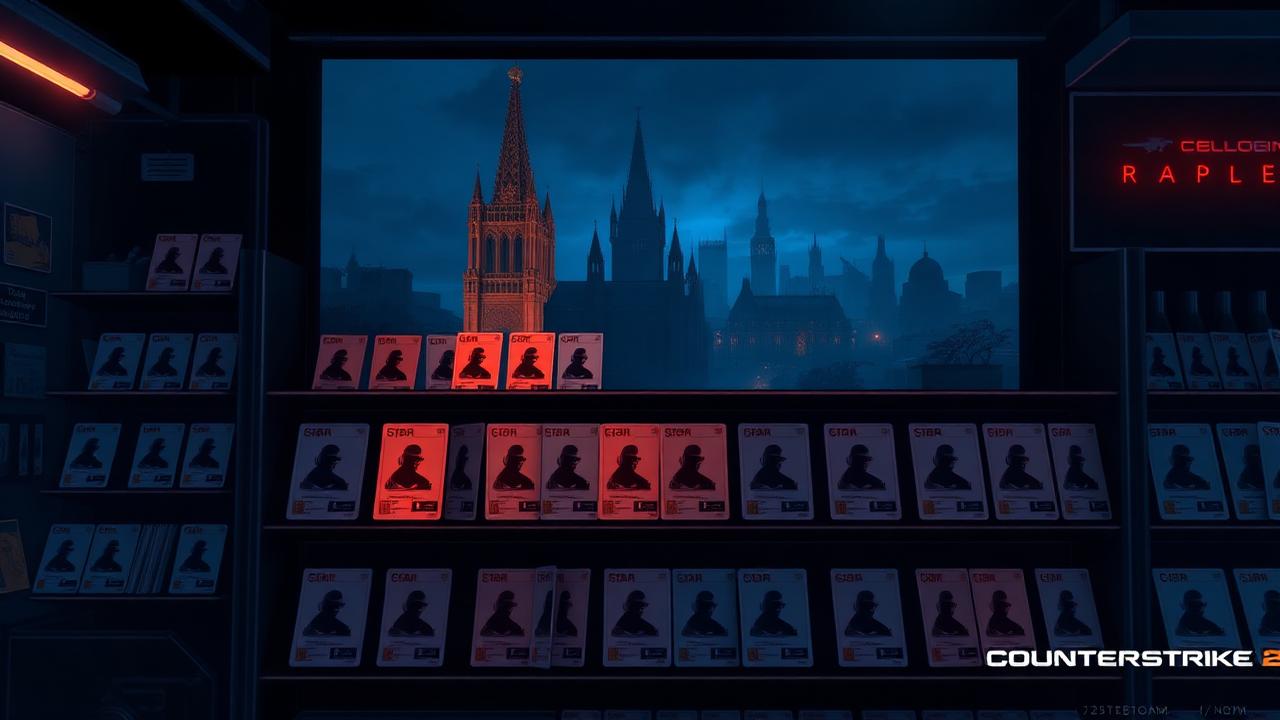
- The Major Shop replaces it. Players browse the full sticker and autograph catalog directly, see the live price of each item, and buy what they want. Prices float — popular stickers cost more, less-loved ones cost less.
- Souvenir-O-Matic replaces souvenir packages. Instead of buying a sealed Cologne 2026 souvenir package and praying for a knife drop with a sticker pattern you like, you take a weapon you already own and "souvenir-ify" it against a specific tournament match. The weapon picks up the match's stickers, gold pattern and player signatures.
The Market Reaction Was Immediate
Within hours of the Major Shop going live, the most-wanted holo and gold autographs were trading well past $1,000. That's a sharp departure from the old capsule era, where most stickers settled in single-digit dollars and only a handful of rare patterns ever broke into the four-figure range over the lifetime of a Major.
The community reaction split clean down the middle. Collectors who hate RNG loved it — for the first time, you can simply pay the asking price for the exact NAVI gold autograph you want. Long-time traders accused Valve of seizing total control of sticker pricing and squeezing out the grey-market dynamics that defined the old capsule meta. Both sides are right.
Why Valve Did It
Two threads converge here. First, the regulatory pressure: with the New York lawsuit hanging over Valve's case economy, removing RNG from the tournament-item stream lets Valve point at one corner of CS2's economy and say "this is just commerce." A storefront with fixed prices is a much harder thing for an attorney general to call gambling than a randomized loot box.
Second, the economics: by replacing capsules with a direct-sale shop, Valve captures the full margin that used to flow into the secondary market. A capsule sold for $1, and most of the resale value of a rare holo ended up with traders. A Major Shop sale at the live market price keeps that spread inside the Steam economy.
What It Means for Collectors, Traders, and Gamblers
The downstream effects depend on which side of the market you're on:
- Collectors: Big winners. No more RNG, no more buying ten capsules to chase one specific holo. You pay the market price and walk away with exactly what you wanted.
- Traders: Big losers, at least for tournament items. The capsule-era arbitrage — buy unopened capsules cheap, open at scale, flip the rare pulls for 50x — no longer exists for Cologne 2026 and beyond. Old capsule stock from past Majors becomes a finite, increasingly scarce collectible category in itself.
- Case-opening and gambling sites: No direct impact on case-opening operators (Valve cases are untouched). But sticker-craft skins are a popular deposit category on many sites, and the price reset on Cologne 2026 stickers means trade values will be choppy for the next few weeks. If you're depositing sticker-crafts at a gambling site, double-check their valuation logic.
- Old souvenir packages: Almost certainly a long-term winner. With souvenir packages permanently retired, the existing Budapest 2025 and earlier stock is the last of its kind. We're already seeing collector premiums on sealed older souvenir packages on Skinport and CS.MONEY.
A Direction-of-Travel Signal
The Major Shop is the clearest signal yet that Valve is steering parts of the CS2 economy away from randomness. Cases haven't been touched — they're still the billion-dollar engine we wrote about in our CS2 case economy analysis — but the tournament-item stream is now a direct-sale storefront. If the strategy works, expect more parts of the Steam Counter-Strike economy to follow the same pattern over the next 12–24 months.
For players, the immediate practical takeaway is simple: if you wanted a specific sticker from a past Major and didn't buy it, the price floor on those items just got firmer. And if you're holding sealed capsules from older Majors, don't open them — the unopened stock is now the collectible category, not the stickers inside.
For everything else CS2-economy related in 2026, our H1 2026 recap covers the lawsuits, the sponsor ban, the BitSkins shutdown and the May market crash that frame this update.