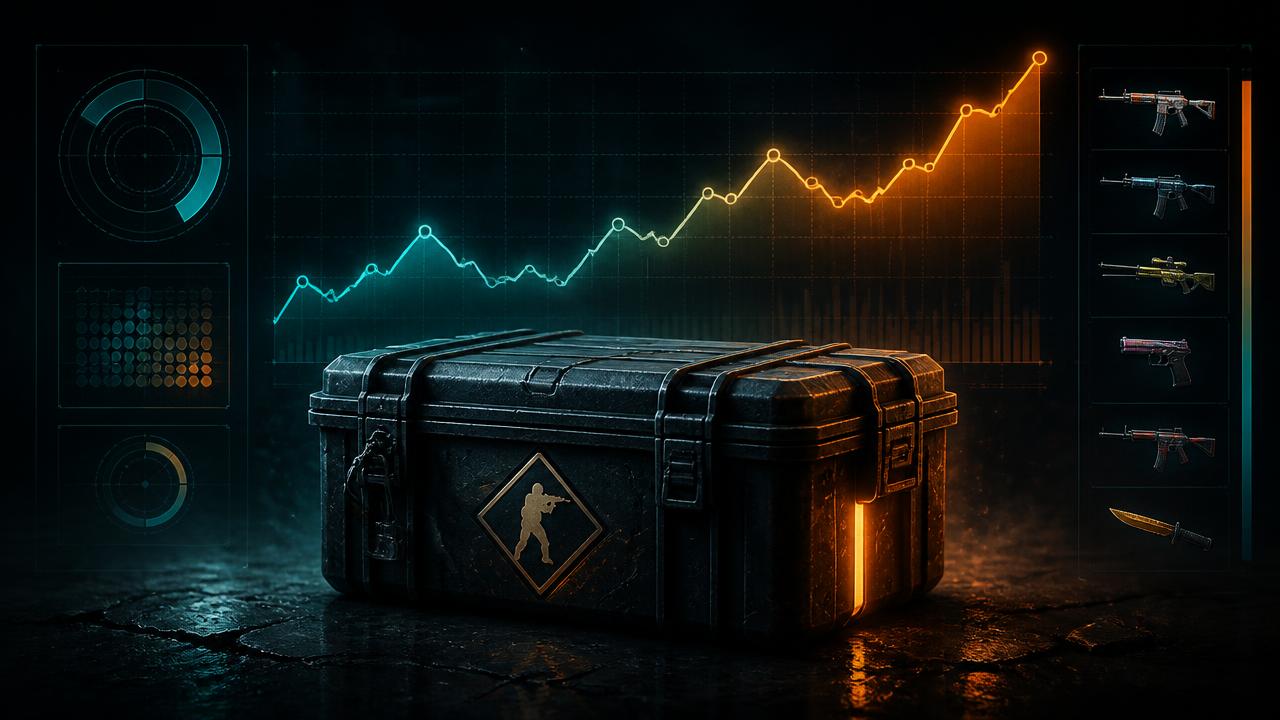

A June 2026 industry analysis put the size of Valve's case-opening business in sharper focus than ever: Counter-Strike 2 case keys are estimated to generate more than $1 billion a year for Valve. That's revenue from one mechanic, on one game, with effectively zero marketing spend — and it explains almost everything about why the third-party CS2 gambling ecosystem exists, why regulators keep circling, and why the skin economy keeps growing even as the player count stays roughly flat.
How the $1 Billion Number Actually Works
The mechanic is deceptively simple. Players earn cases as free drops while playing CS2. To open one, they need a key — and the key always comes from Valve, at a fixed price (currently $2.50 in most regions). With tens of millions of monthly active players and a case-opening culture that streamers reinforce constantly, even a small fraction of players buying a handful of keys a year compounds into a 10-figure revenue line.
What makes the system uniquely profitable is that Valve doesn't have to manufacture demand for the underlying skins. The third-party market — Steam Community Market, Skinport, CS.MONEY, the case-opening sites we cover, gambling operators — does that for free. Every case opened with a $2.50 key feeds a multi-billion-dollar secondary market that, in turn, makes the next key purchase feel more rational.
Why Regulators Are Treating It Like Gambling
The regulatory case is straightforward. A case opening has three of the four classical elements of a wager: consideration (the price of the key), chance (the case's published drop rates), and a reward of real-world value (skins routinely trade for thousands of dollars on third-party markets). The only contested element is whether the reward itself is "value" — which is exactly the argument at the center of the New York lawsuit Valve is currently fighting.
Valve's official position is that skins are cosmetic items with no in-game advantage and no Valve-sanctioned cash-out path. That argument worked for years. It works less well today, with publicly verifiable million-dollar skin sales on record and an entire industry of marketplaces and gambling sites quoting prices in USD.
What This Means for Third-Party Gambling Sites
The third-party case-opening and skin gambling ecosystem only exists because the underlying Valve case economy is so large. Three things follow directly:
- Third-party case sites compete on margin, not novelty. Operators like Hellcase, DatDrop, and CSGOLuck are essentially offering players a different EV curve than Valve's official cases. The whole market only works because Valve sets the reference price.
- Skin gambling sites are downstream of skin valuations. When skin prices crash, as they did in May 2026, the value of every deposit on every gambling site drops in lockstep. The keys keep selling; the bets get smaller.
- Regulatory risk is correlated. If a U.S. court eventually classifies Valve cases as gambling, the legal posture of every third-party site that traffics in those skins changes overnight — including the ones currently licensed under jurisdictions that treat skins as commodities, not wagers.
Why the Mechanic Has Aged So Well
The CS2 case is now more than a decade old as a monetization mechanic. It has survived two engine transitions, repeated developer scrutiny of loot boxes globally, and a culture of streamer-driven case-opening that brought sustained attention from regulators in the EU, UK, Australia and now the U.S. It keeps working for the same reasons it worked in 2014:
- The case is free. Players don't perceive the purchase as a gamble — they perceive it as a key purchase to "unlock" a thing they already own.
- The rare drop is real. Knife and gloves drops, with publicly verifiable secondary-market prices in the thousands of dollars, are a genuine outcome — not a "rare" cosmetic with no market value.
- The community markets the product. Trade-up videos, knife-unboxing clips, and skin-investing TikToks do more for case sales than any Steam storefront promotion could.
What to Watch in H2 2026
Two questions will define the next six months for the case economy. First, the New York court's response to Valve's motion to dismiss — a denial would push the case into discovery, and Valve's internal revenue figures could become public for the first time. Second, the trajectory of the underlying skin market: after the May 2026 crash, the question is whether prices recover enough to keep retail interest in case-opening at current levels.
For players, the practical advice hasn't changed: cases are entertainment with a negative expected value, third-party operators on top of cases compound that EV problem, and the only safe assumption is that you are net-negative against the house. Our how CS2 gambling works guide walks through the math; our responsible gambling page is the right starting point if any of this is feeling less like a hobby and more like a problem.