
The first half of 2026 has been the most consequential six-month stretch the CS2 skin gambling industry has ever lived through. A state attorney general put Valve in court over loot boxes, Valve banned skin-gambling sponsors from official tournaments, the oldest third-party marketplace shut down, and the skin economy itself lost roughly a billion dollars of paper value. None of these stories happened in isolation — they're the same pressure pushing on the same industry from four different directions. Here's the recap, and what it actually means for players going into H2.
1. New York v. Valve — Loot Boxes Go to Court
In February, New York Attorney General Letitia James filed suit alleging that Valve's case-opening mechanic constitutes illegal gambling under state law. Valve responded informally in March and then, on May 19, filed a formal 42-page motion to dismiss — the now-infamous "Happy Meal toys" filing that compared CS2 cases to baseball cards and gachapon. The case is the first time a U.S. state has taken the loot-box question to court at this scale, and a ruling against Valve would force structural changes to how skins are distributed, traded and gambled.
Background reading: the original complaint, Valve's first response, and the formal motion to dismiss.
2. Valve Bans Skin Gambling Sponsors at CS2 Tournaments
Carried over from late 2025 but enforced for the first time in the spring 2026 tournament cycle: professional CS2 teams can no longer display skin gambling or case-opening site logos at official events. The rule didn't kill operator marketing — most of the spend rotated into streamer deals and direct affiliate programs almost overnight — but it was the first time Valve drew a hard line between the competitive scene and the third-party gambling ecosystem. Full coverage: Valve's tournament sponsor ban.
3. BitSkins Shuts Down
In late May, BitSkins — one of the oldest third-party CS2 marketplaces — announced it was closing, citing legal and technical constraints. Displaced traders mostly migrated to Skinport, CS.MONEY and DMarket, but the closure is a useful signal: the regulatory pressure on the skin economy now reaches all the way down to the marketplace layer, not just the gambling operators. We broke this down in our BitSkins shutdown coverage.
4. The May Skin Market Crash
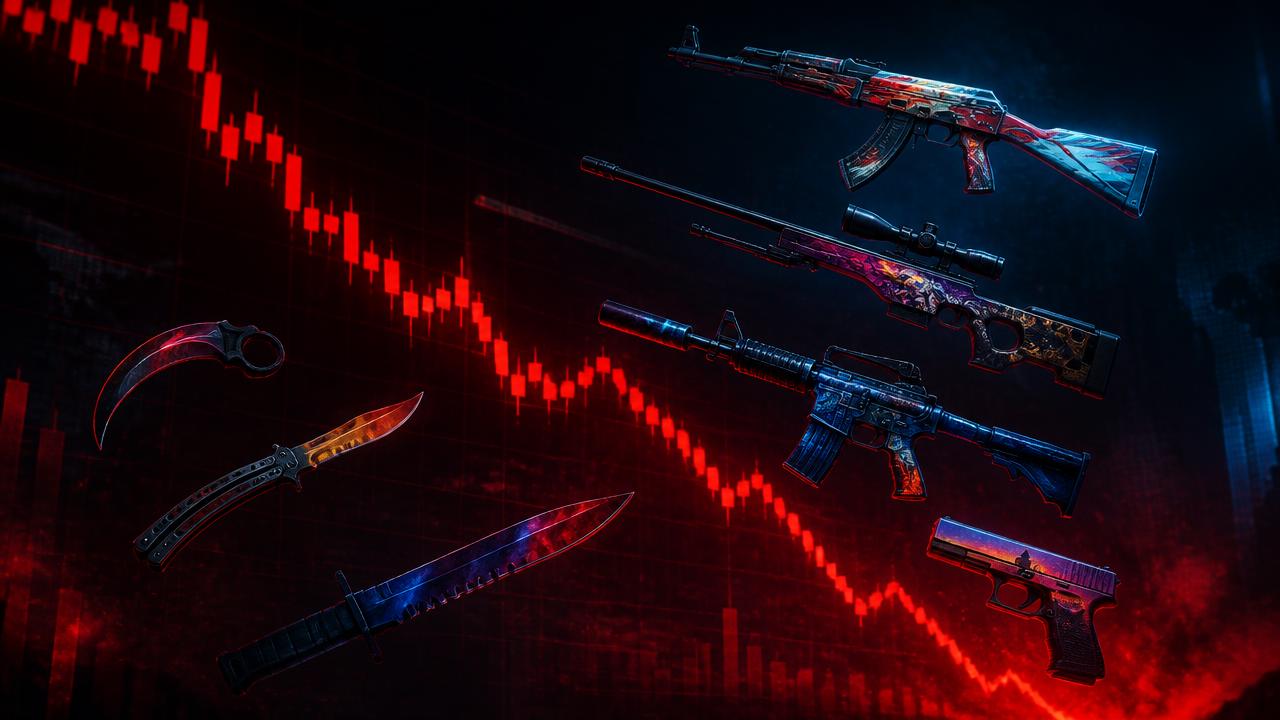
After hitting a record high in Q1, the tracked CS2 skin market lost hundreds of millions in value across a single week in May, settling around $4.50B. The crash followed Valve's motion to dismiss, the BitSkins news, and a broader cooling in the high-tier sticker market we flagged in our Q2 2026 market update. The practical effect for gamblers: if you deposited skins at Q1 peak prices and they're still sitting in a site inventory, you're probably looking at a meaningful paper loss before you've even placed a bet. Full breakdown: the May crash explainer.
5. CSGOEmpire Bans Trade Reversals
A smaller but structurally important change: CSGOEmpire introduced a hard no-reversals policy on marketplace trades, citing repeated abuse via Steam dispute claims. Other operators are likely to follow, and it's a useful tell about where third-party trust is heading — toward stricter, more bank-like rules and away from the loose "we'll figure it out in support" era. See the policy update.
What It Means Going Into H2 2026
Three takeaways for players:
- Legal risk is being priced in. Until New York rules on the motion to dismiss, expect skin valuations to stay volatile. Don't deposit more than you'd be willing to lose to a 10% overnight repricing.
- Stick to operators with real licenses. The compliance gap between licensed and unlicensed sites is widening fast. Our site-selection guide walks through what to actually check.
- Withdraw faster than you used to. Marketplace closures and reversal bans both push in the same direction: don't leave large balances or expensive skins sitting on third-party platforms longer than necessary. Our deposits & withdrawals guide covers the mechanics.
The big unknown for H2 is the New York ruling. Everything else — sponsor enforcement, marketplace consolidation, operator policy tightening — is downstream of how courts and regulators decide to classify a CS2 case. We'll keep this recap updated as that picture sharpens.