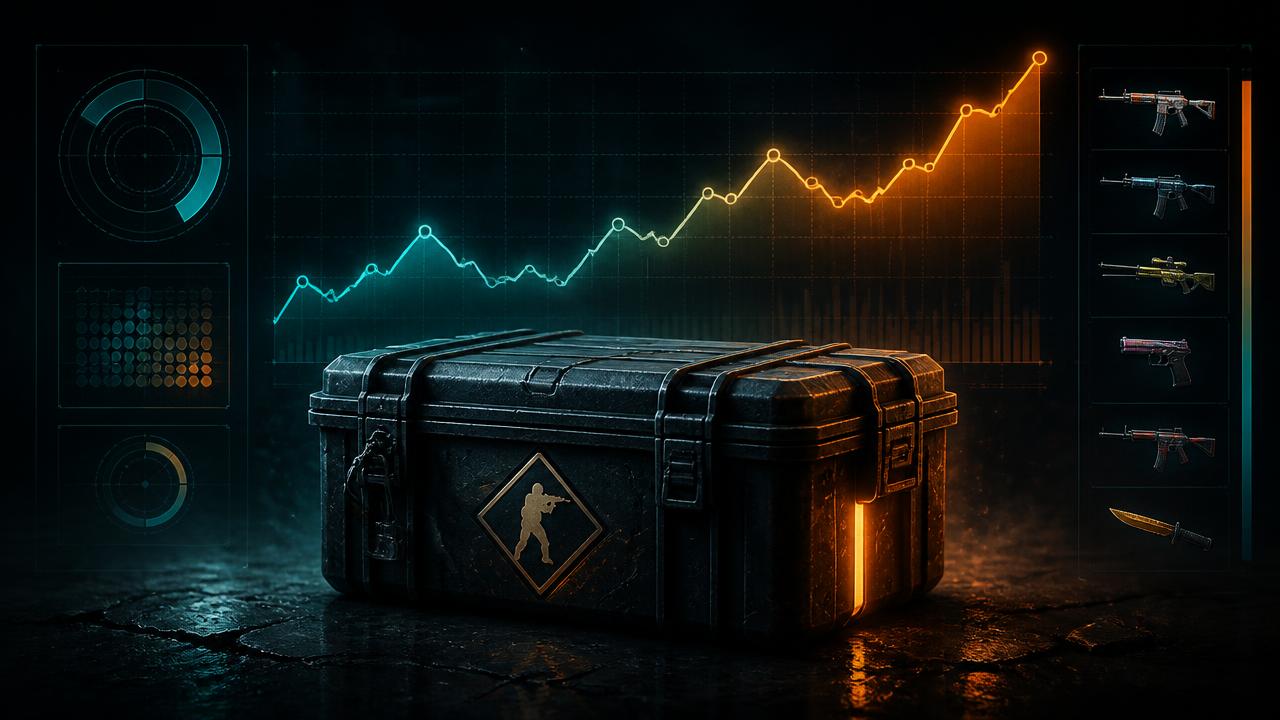

New York Attorney General Letitia James has filed a lawsuit against Valve, accusing the company of breaking state gambling laws through loot boxes in Counter-Strike 2, Team Fortress 2, and Dota 2. The case landed in New York state court on February 25, 2026, and it asks the court to stop the alleged conduct, force refunds and damages, and hit Valve with a financial penalty tied to the state's claims about profits from loot boxes.

The Core Allegation
New York says Valve charges players real money for a chance-based result that can have real-world value. In CS2, that means paying for keys to open weapon cases. The complaint says most keys cost $2.49 plus applicable sales tax, and it points to New York's sales tax amount in the filing.
The state also leans hard on presentation. In its press release, the attorney general's office compares the case-opening sequence to a slot machine, pointing to the animated spin that stops on a selected item.
Why the Resell Market Matters to the Case
A big chunk of this lawsuit is not just about randomness. It is about cash-out. New York argues that Valve built an ecosystem where rare cosmetic items can turn into something people treat like money. In the press release, the attorney general's office says one CS skin reportedly sold for more than $1 million and highlights reporting that the CS skins market topped $4.3 billion in March 2025.

The complaint also spells out how Valve earns from the system beyond key sales. It claims Valve collects a 15% commission when items sell on the Steam Community Market.
From there, the filing draws a straight line to third-party marketplaces. It says Valve designed Steam to support third-party trading through tools like the Steam "Trade URL," and it notes Valve's own user-facing language that encourages sharing that URL on third-party trading sites.
The complaint goes further than general statements. It includes examples where Valve allegedly helped or interacted with major third-party marketplaces, including domain and account-access issues around CSFloat and Skinport, framed as part of the state's argument that Valve knew how cash marketplaces worked.
It also puts "skins gambling sites" directly on the record. The filing describes the rise of websites that let users gamble using CS skins as stakes, starting with esports betting and then expanding into casino-style games.
What Laws New York Says Valve Violated
This is not a private class action. It is New York's attorney general bringing a state enforcement case. The complaint cites Executive Law § 63(12) as the main enforcement vehicle and argues Valve's loot boxes violate Article I, Section 9 of the New York Constitution, plus state Penal Law provisions tied to promoting gambling (the complaint references Penal Law §§ 225.05 and 225.10 in its requested injunction language).
The remedies New York asks for are also aggressive. The "Prayer for Relief" section seeks a permanent injunction, an accounting of losses, full restitution and damages, disgorgement, and a fine "of three times" the amount of Valve's gain from the alleged practices, citing Penal Law § 80.10.
One detail worth watching: the complaint claims Valve "repeatedly" accepted, in a single day, more than five bets totaling more than $5,000. That language appears in the portion of the filing arguing first-degree promoting gambling.
Youth Harm, Account Theft, and "Trade Protection"
The attorney general's messaging frames this as a youth protection case. In both the press release and the AP's coverage, the office points to research suggesting kids introduced to gambling face a higher risk of later gambling problems.
The state also ties the high-value market to theft. The press release says Valve received "hundreds of thousands" of support requests from users reporting hacked accounts or being tricked into transferring items. The complaint echoes that theme as part of its "thieves" section.
There is also an interesting, very CS2-relevant point buried in the complaint's timeline. It cites Valve's rollout of "Trade Protection" in July 2025, described as a way to reverse recent trades in supported games to help users who lost items.
Valve Response and What Comes Next
As of the most recent reporting, Valve has not publicly responded to the allegations. The AP reported that messages seeking comment were left for the company.
Next steps are straightforward, even if the outcome is not. Watch for: a public Valve response, if one comes; any early motion to dismiss; and any attempt by New York to seek fast injunctive relief that could affect key sales or case-opening access for New York residents.
Also keep an eye on copycat pressure. Loot boxes have faced mixed outcomes in courts and regulators across different places, and gaming companies have often fought these cases on technical legal definitions of "value," "consideration," and what counts as a cash-out path. A law-firm review of U.S. loot box litigation has noted that defendant wins have been common in several recent cases, even while appeals and new theories continue to develop.
If you run CS2 gambling news, this is the big angle: New York is not only attacking the randomness of cases. It is attacking the entire loop, including how skins can be priced, moved, and converted through Steam-linked tools and third-party markets.